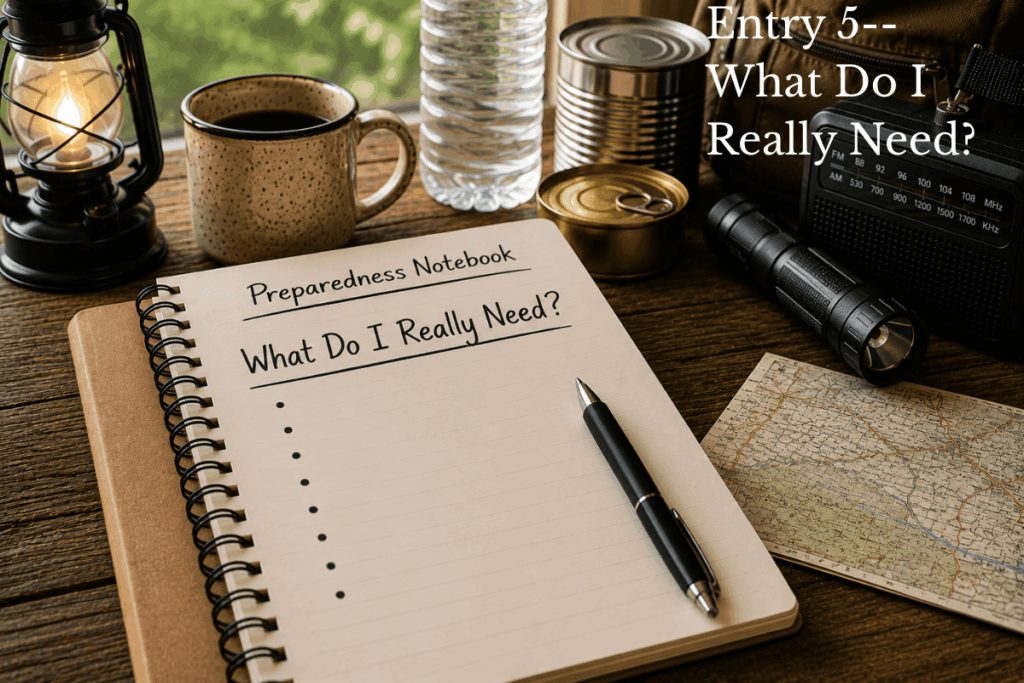
Every answer becomes a plan, and every plan reduces uncertainty.
When people think about preparedness, they often start by asking what they should prepare for.
A tornado?
An ice storm?
A flood?
A long power outage?
Those are reasonable questions, but there may be a better one:
What would I do if something I depend on suddenly became unavailable?
The purpose of preparedness is not to worry about every possible emergency. It is to understand the systems we rely on and make simple plans for when those systems are temporarily disrupted.
Recent events such as Hurricane Helene showed that very different communities can experience many of the same challenges: power outages, communication failures, fuel shortages, limited access to food, and interrupted services.
The event itself may be different, but the consequences are often remarkably similar.
One way to think about preparedness is to consider the essential systems that support daily life.
Water
Most people think first about drinking water. But water is also needed for cooking, sanitation, hygiene, and laundry.
If your water service stopped today, how long could you function comfortably?
Food
Food shortages are often really access shortages. Stores close, roads become difficult to travel, and deliveries are interrupted.
How long could your household eat without a trip to the grocery store?
Power
Electricity affects nearly every part of modern life.
Lighting, refrigeration, communications, heating, cooling, and many household appliances as well as medical devices depend on it.
What becomes difficult—or impossible—when the power goes out?
Communication
When normal routines are disrupted, information becomes important.
How would you receive weather updates, emergency information, or communicate with family members if normal systems became unreliable?
Security
Security is not simply about protecting property.
It is about maintaining a sense of safety and stability during uncertain situations.
What simple measures help your household feel secure during an extended disruption?
Important Information
Many important records now exist primarily in digital form.
Insurance policies, contact information, medical records, and financial documents may be difficult to access if devices fail or internet service is unavailable.
Do you have access to the information that matters most?
Financial Access
Most of us rarely use cash anymore.
But electronic payments depend on electricity and communications. If those systems fail, access to money can become temporarily limited.
Rather than focusing on a specific dollar amount, consider what expenses you might need to cover if electronic payments were unavailable.
Could you pay for:
- Fuel?
- Groceries?
- Prescription medications?
- Emergency supplies?
- Temporary lodging if necessary?
The goal is not to keep large amounts of cash at home. The goal is to have enough available to bridge the gap until normal financial systems are restored.
Thinking in Time Frames
A disruption lasting a few hours creates one set of challenges.
A week creates another.
A month creates something entirely different.
Rather than asking, “Am I prepared for a tornado?” consider asking:
- Could I manage without power for 24 hours?
- Could I manage without water for a week?
- Could I function without easy access to stores for a month?
Questions like these often reveal where preparation is needed and where a simple plan would make life easier.
Final Thoughts
The good news is that preparedness does not require having all the answers today.
It simply begins by asking a few thoughtful questions.
What would I do if the power was out for a day?
How would I manage if water service was interrupted?
What if I couldn’t use a debit card for a week?
Every answer becomes a plan, and every plan reduces uncertainty.
Preparedness is not about fear of what might happen. It is about confidence in knowing you have thought through what you would do if it did.