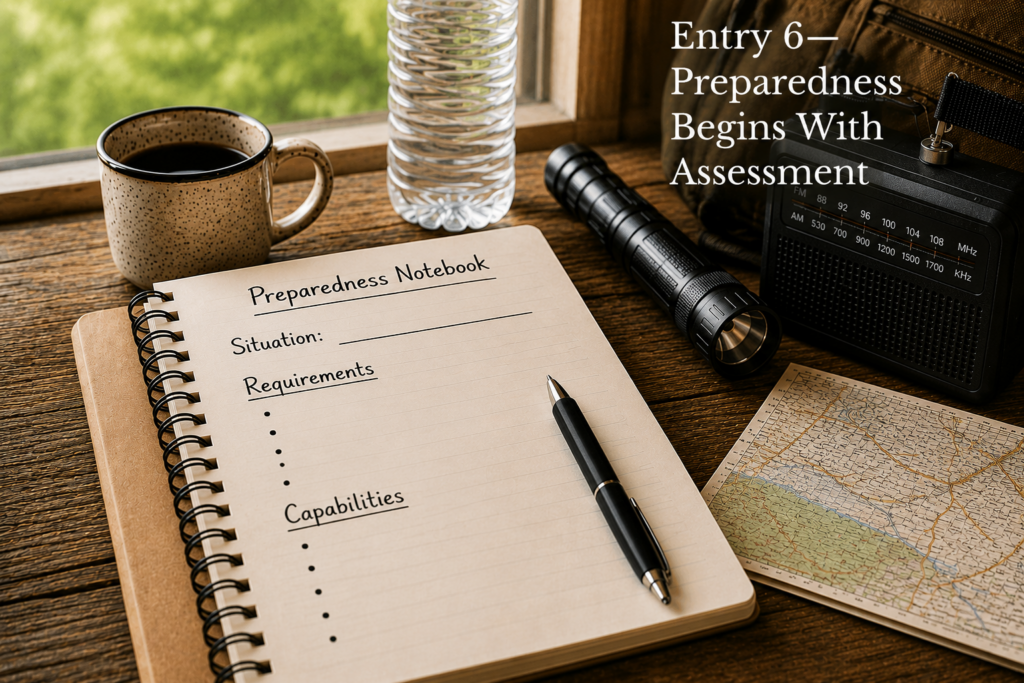
After walking through some of life’s unwelcome circumstances, I’ve discovered that preparedness is about much more
than simply gathering supplies. Over the years, I’ve learned that every good preparedness decision begins in the same place: assessment.
Before we jump into gathering supplies or making plans, we need to thoughtfully assess the situations life may place before us.
We need to consider how they could affect our families, determine what actions may be required to respond, and identify
the supplies and skills needed to carry out those actions.
Looking Beyond the Event
Assessment is much more than recognizing a situation. It is taking time to understand what is happening, what consequences we should expect, and what responses have proven effective in similar situations.
Years ago, we lived in South Florida when a hurricane was forecast to make a direct landfall in our city. After evacuating, we returned home to discover trees down everywhere, no electricity, empty grocery store shelves, and not even a bag of ice to be found in the Florida heat. We lived without power for a week.
The hurricane was over, but its consequences had only begun.
An event is often only the beginning. Understanding the consequences that are likely to follow is just as important as understanding the event. Once we understand the situation and its likely consequences, we can begin asking a different set of questions. What will this situation require of us? What actions may become necessary? What supplies and skills will those actions require?
Finally, we compare those requirements with our current capabilities. What plans are already in place? What supplies, equipment, and skills do we already have? Where are the gaps? Identifying those gaps gives us a clear direction for strengthening our preparedness before the situation is upon us.
A Simple Assessment Process
Whether you’re considering a prolonged power outage, a serious illness, a job loss, or another disruption, the same assessment process can help you think through the situation.
Understand the Situation
Learn as much as you can.
- What is happening?
- How long does it typically last?
- What consequences should you expect?
- What responses have proven effective in similar situations?
Identify the Requirements
Based on those expected consequences:
- What actions are likely to be needed?
- What supplies, equipment, or skills would those actions require?
Evaluate Your Capabilities
Compare those requirements with your current capabilities.
- Which requirements can you already meet?
- What plans are already in place?
- What supplies, equipment, and skills do you already have?
- Where are the gaps?
- What additional planning, supplies, equipment, or skills would strengthen your ability to respond?
Applying the Assessment Process
Now let’s put this process into practice. The questions below aren’t intended to overwhelm you or suggest that every family should prepare for every possible situation. Instead, think of them as conversation starters. As you read through them, notice which one causes you to stop and think. That may be the best place to begin.
- If your electricity was unavailable for a week, what would your family require to remain safe and reasonably comfortable?
- If someone in your family depended on electrically powered medical equipment, how would you provide power if the electrical grid was unavailable?
- If someone in your family faced a long-term illness, what changes would daily life require?
- If running water became unavailable for several days, how would your family obtain safe water and manage sanitation?
- If family members were separated when an emergency occurred, how would you communicate or reconnect?
- If a job loss significantly reduced your income, what immediate adjustments would become necessary?
Conclusion
Choose one situation that is relevant to your family and work through the assessment process. Compare its requirements with your current capabilities. Identify one gap, and begin strengthening it.
Over time, assessment becomes more than a preparedness exercise. It becomes a habit—a mindset that helps you thoughtfully evaluate life’s situations and make wiser decisions long before they’re needed.