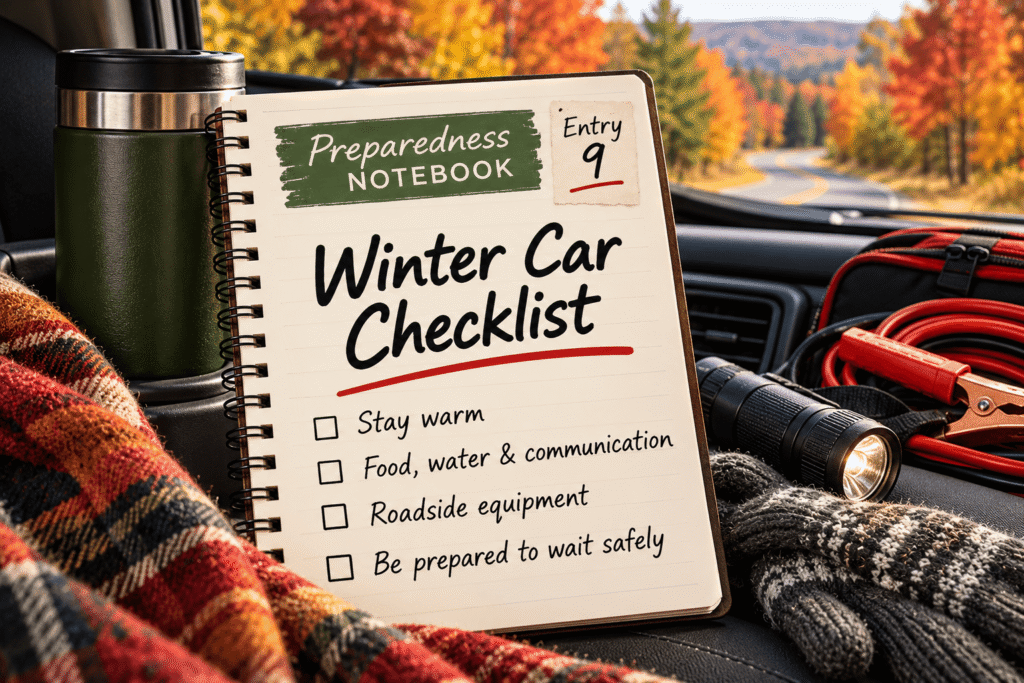
A dead battery, flat tire, road closure, or accident can turn an ordinary winter drive into hours spent waiting for help. A little preparation
ahead of time can make that wait safer—and much more comfortable.
Assessment
Think about where and how you normally drive in winter. Are you mostly close to home, or do you travel rural roads or longer distances?
How quickly could help realistically reach you if weather conditions were bad? Your winter car kit should reflect the conditions you
are most likely to encounter.
Plan
Before longer winter trips, check the weather and road conditions and let someone know your route and expected arrival time.
If conditions deteriorate, changing your plans may be the wisest preparedness decision you make.
Supplies
Stay Warm
- Warm blanket or sleeping bag
- Hat and gloves
- Extra socks
- Hand warmers
- An extra coat or warm layer
Food, Water & Communication
- Bottled water
- Shelf-stable snacks
- Phone charging cable
- Portable battery bank
- Flashlight with extra batteries
Roadside Equipment
- Jumper cables or portable jump starter
- Ice scraper and snow brush
- Small shovel
- Tire-pressure gauge
- Basic first-aid kit
- Reflective triangles or emergency markers
- Traction aid such as sand or cat litter
Don’t Forget the Vehicle
Winter preparedness begins with the vehicle itself. Keep up with routine maintenance, check your battery and tires,
and avoid routinely driving with very little fuel in the tank.
If You Become Stranded
Stay with your vehicle unless there is a clearly safer location nearby. Your vehicle provides shelter and makes you
easier for rescuers to find. Use your emergency supplies to stay warm and comfortable while you wait for assistance.
If you run the engine for heat, make sure the exhaust pipe is clear of snow and periodically check that it remains clear.
Skills
Having equipment is helpful, but knowing how to use it matters just as much. Know how to jump-start your vehicle,
use your emergency equipment, locate your tow point, and contact roadside assistance before you are standing beside
the road in bad weather trying to figure it out.
One More Thing
Once your winter kit is assembled, leave it in the vehicle. Preparedness works best when the things you need are already where you need them.